DRN Cohesinopathies
German Reference Network for Cohesinopathies
German Reference Network for Cohesinopathies
The German Reference Network (DRN) for Intellectual Disability, Telemedicine, Autism, and Congenital Anomalies—Cohesinopathies Subgroup (dITHACA Cohesinopathies) is an alliance of specialized centers for rare diseases (ZSE) and other scientific and clinical institutions involved in patient care and research. The network pools expertise on rare genetic disorders involving abnormalities of the cohesin complex (including Cornelia de Lange syndrome) and advocates for the interests of patients with cohesinopathies. These rare syndromic disorders are characterized by distinctive dysmorphisms, developmental delays, and intellectual disabilities of varying severity, which are attributable to molecular alterations in the cohesin complex.
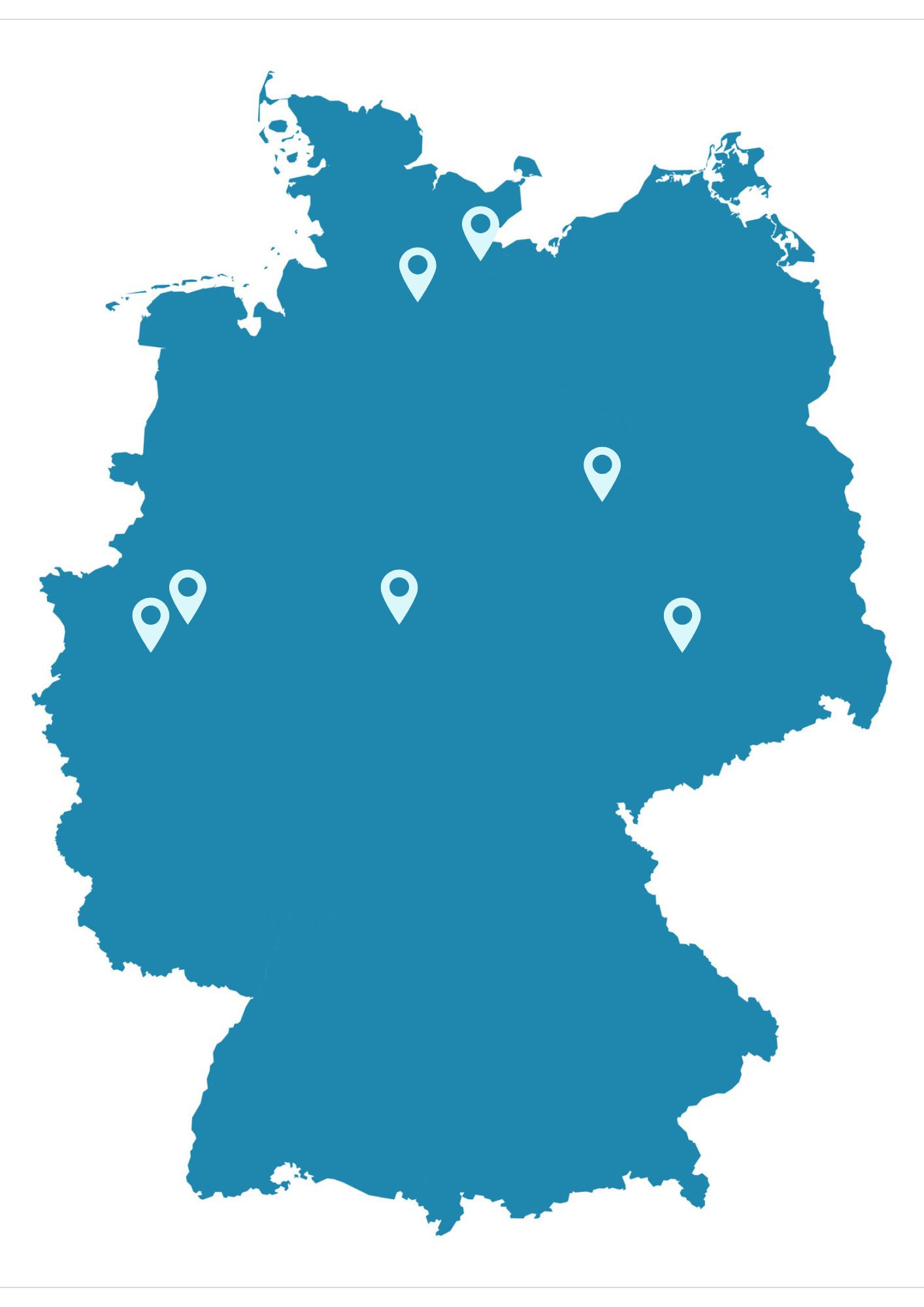
DRN Cohesin locations
The German Reference Network for Cohesinopathies (DRN Cohesin) is an alliance of specialized centers with particular expertise in the diagnosis, care, and research related to people with cohesinopathies. Within this network, physicians and scientists collaborate across disciplines to ensure comprehensive care and the continuous advancement of knowledge and treatment approaches.
The Registry
As part of the German Reference Network for Intellectual Disabilities, Telemedicine, Autism, and Congenital Anomalies (dITHACA Cohesinopathies), a German-European registry for cohesinopathies is currently being established.
The overarching goal of the registry is to establish a central database that will enable research into genetic, clinical, and therapeutic aspects of cohesinopathies at the national level and, in the long term, at the European level, thereby contributing to improved care for this patient group.
This register is designed to systematically collect clinical and genetic data, symptoms, disease progression, and information on lifestyle habits and care approaches. The data collected will enable detailed analyses of similarities and differences between individual cohesinopathies, as well as of various genetic variants within the same syndrome or gene. Through close collaboration with scientific projects, these findings can be immediately processed and investigated in greater depth using cellular models.
The registry provides an essential foundation for research into these rare diseases. At the same time, it supports the efficient transfer of new findings back into patient care. Close collaboration among affected individuals, clinics, and research institutions promotes the development of future personalized therapeutic approaches with the goal of improving the quality of life for patients and their families.
Contact
Would you like to get in touch with us?
Please contact us by email.

DIAGNOSIS
Our goal is to optimize the diagnosis of people with cohesinopathies and to improve their medical care in the long term.
Identification is carried out using state-of-the-art genome sequencing. The best-known member of this ever-growing group of genetic disorders is Cornelia de Lange syndrome (CdLS).
The clinical presentation is broad and exhibits considerable variability. Characteristic facial features are often present. However, these features can overlap significantly across different cohesinopathies and may be caused by different genetic factors.
RESEARCH
Our goal is to advance research on cohesinopathies in a targeted manner and to strengthen the transfer of knowledge between science and clinical practice.
Within our network, we conduct genetic analyses to identify specific gene variants and correlate them with clinical features and disease progression. Another focus is on elucidating the molecular mechanisms that lead to structural changes and functional disorders of the cohesin complex.
To optimize the scientific analysis of data, we are also establishing close collaborations with international research consortia.

COOPERATION
Research into cohesinopathies is to be further developed in a targeted manner, and the transfer of scientific findings into clinical practice is to be strengthened.
To systematically evaluate phenotypes, genetic findings, and therapeutic approaches, there is close collaboration among the participating centers of the German Cohesinopathies Reference Network, as well as at the national and international levels.
New scientific findings are made publicly available through publications.
News
- Chromatinopathies: A focus on Cornelia de Lange syndrome. Avagliano L, Parenti I, Grazioli P, Di Fede E, Parodi C, Mariani M, Kaiser FJ, Selicorni A, Gervasini C, Massa V. Clin Genet. 2020 Jan;97(1):3-11. doi: 10.1111/cge.13674.
- Pathogenic variants in the cohesin loader subunit MAU2 lead to a new Cornelia de Lange Syndrome subtype. Parenti I, Hesters A, Gil-Salvador M, et al. medRxiv [Preprint]. 2025 Nov 22:2025.11.16.25339042. doi: 10.1101/2025.11.16.25339042.
- STAG2-truncating variants reveal a mosaic STAG2 inactivation pattern and compensatory mechanisms involving cohesin complex remodeling. Moronta Gines M, Wessels MW, Casa V, et. al. iScience. 2025 Nov 22;28(12):114195. doi: 10.1016/j.isci.2025.114195.
Events

Germany Meeting of the Cornelia de Lange Syndrome Working Group
2024 in Löwenstein
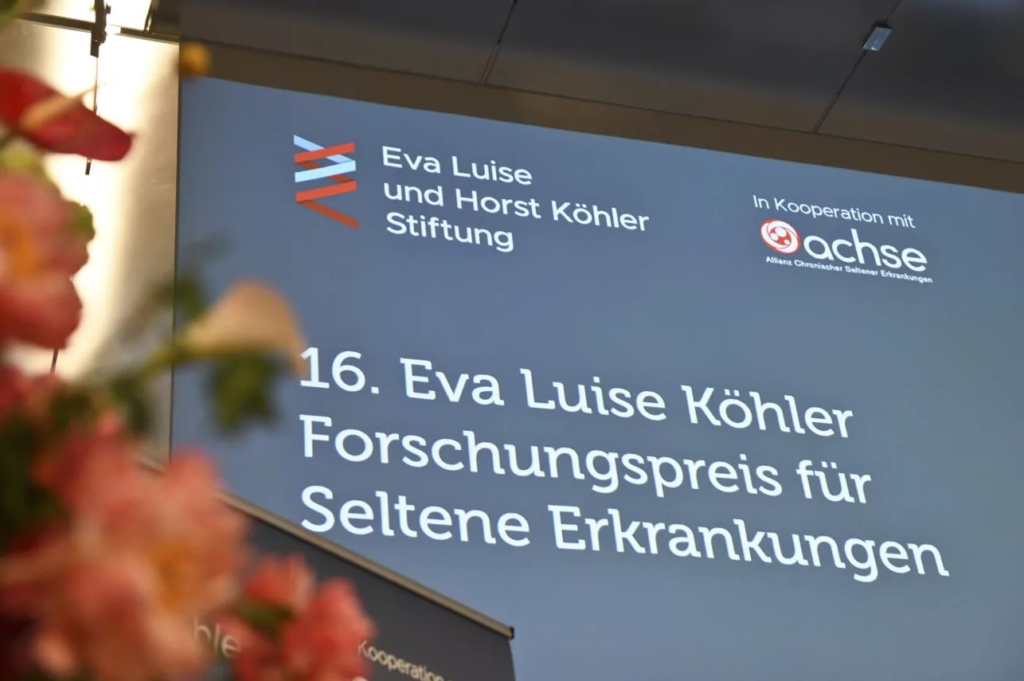
Award Ceremony for the Eva Luise Köhler Research Prize for Rare Diseases
June 20, 2025, Berlin
National Conference on Rare Diseases – NAKSE 2025
Sept. 18–19, 2025, Berlin: Professional exchange at the National Conference on Rare Diseases.

ERN ITHACA Board Meeting
Dec. 3–5, 2025, Bergen, Norway